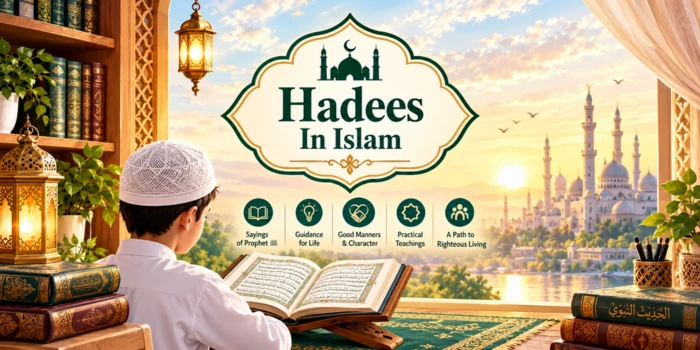
Hadees is an important source of Islamic information that enables Muslims to recognize the sayings, actions, approvals, and lifestyle of Prophet Muhammad ﷺ. At the same time, as the Quran is the primary source of guidance in Islam, Hadees and Prophetic traditions help Muslims understand many teachings of the Quran in a practical manner. From prayer and fasting to proper manners, family relationships, charity, and daily conduct, these narrations offer precious guidance for Muslim life.
For novices, understanding Hadees can make Islamic research less difficult and more meaningful. Resources available via Deeniyat online can also assist college students in exploring primary Islamic principles in an easy and accessible method. Whether or not a person searches for Hadees in Urdu, Hadees in English, or Hadees in Hindi, the purpose is to understand the teachings effectively and learn how they relate to regular lifestyles. In this newsletter, we can provide an explanation for its which means, its types, significance, most important books, Ahle Hadees, and commonly asked questions in an easy and informative method.
What Is the Meaning of Hadees?
The word Hadees comes from Arabic and typically means a declaration, record, narration, or account. In Islamic terminology, it refers to reviews approximately the sayings, actions, approvals, and descriptions of Prophet Muhammad ﷺ.
Those narrations have been transmitted by means of the companions and later generations of Muslim students. Students cautiously examined the chains of narrators and the contents of narrations to determine their reliability.
Hadees performs an essential role in understanding Islamic teachings, as it gives realistic examples of the way Prophet Muhammad ﷺ observed and defined the teachings of the Quran.
Hadees In Urdu: Understanding Its Meaning
For Urdu-speaking Muslims, Hadees in Urdu make Islamic teachings more accessible. Urdu translations and explanations are available in lots of traditional and modern Islamic guides.
Whilst analyzing a translation, it's vital to think about the source and whether or not the narration has been correctly translated and properly referenced. A reliable Urdu clarification can help readers understand the context and practical instructions of a narration.
Why Is Hadees Important in Islam?
The importance of Hadees comes from its function in explaining and demonstrating the lessons of the Quran. Many elements of Islamic practice are understood extra definitely thru the Prophetic traditions. For example, the Quran instructs Muslims to set up prayer, at the same time, the Prophetic Sunnah offers practical information about how prayer was performed.
Similar guidance may be observed concerning fasting, charity, pilgrimage, manners, relationships with relatives, and different elements of Muslim existence. It's consequently an important part of Islamic studies and a chief source for appreciating the Sunnah of Prophet Muhammad ﷺ.
What Are the Two Types of Hadees?
The phrase 2 types can refer to exclusive scholarly classifications, so it is vital to apprehend the context.
One common classification based on the number of transmitters divides narrations into:
Mutawatir: A narration transmitted via several independent chains in a manner that offers pupils a high level of certainty regarding its transmission.
Ahad: Narrations that do not reach the level of mass transmission. Ahad narrations are further classified by scholars into categories such as Mashhur, Aziz, and Gharib.
Another classification looks at the content of a narration, such as Qawli (sayings), Fi'li (actions), and Taqriri (approvals). Therefore, there is not only one universal “two-type” classification.
How Many Hadees In Islam?
There's no fixed range of Hadees in Islam. One of a kind collections incorporate exclusive numbers of narrations, and the identical narration may additionally appear in several books with one-of-a-kind chains or wording.
Main collections incorporate lots of narrations, however, counting them as one exact number may be misleading due to the fact that scholars use different strategies of counting repeated narrations, chains, and variations.
For this reason, rather than requesting one very last number, it's much more beneficial to take a look at the primary collections and learn about the authenticity and type of man or woman narrations.
How Many Hadees Books Are There in Islam?
There are far more Hadees books than the normally noted six Sunni collections. Muslim scholars have compiled several works masking true, weak, biographical, criminal, thematic, and different varieties of narrations.
The Six Books are specifically well-known in Sunni scholarship, but they should no longer be understood as the sole Hadees books in the Sunni tradition. Special pupils and colleges have produced many additional collections throughout Islamic history.
When studying a particular narration, it is better to look at its source, chain of transmission, scholarly grading, and explanation rather than judging it only by the name of the book.
Major Hadees Books in Islam
Several important collections were compiled by Muslim scholars over centuries. Among the most well-known Sunni collections are:
Sahih al-Bukhari
Sahih Muslim
Sunan Abi Dawud
Jami' al-Tirmidhi
Sunan al-Nasa'i
Sunan Ibn Majah
The first two are broadly referred to as Sahih al-Bukhari and Sahih Muslim, whilst the six collectively are normally referred to as the Kutub al-Sittah, or Six Books.
Shia Islamic scholarship also has its own primary collections, including Al-Kafi, man los angeles Yahduruhu al-Faqih, Tahdhib al-Ahkam, and Al-Istibsar. Consequently, the answer depends on which Islamic scholarly way of life and series system is being mentioned.
Which Is the Best Hadees?
There's no single narration that could universally be referred to as the first-rate Hadith. The more useful query is whether a selected narration is true and what reliable students have explained about it.
Sahih skill is proper, and scholars have developed special methods for comparing narrations. Amongst Sunni collections, Sahih al-Bukhari and Sahih Muslim are especially well-known for their collections of authentic narrations.
However, authenticity does not mean that every narration outside these two books is weak. Scholars evaluate individual narrations according to established principles.
What Is Ahle Hadees?
Ahle Hadees generally refers to a Sunni Islamic movement or scholarly approach that places strong emphasis on following the Quran and genuine Prophetic Sunnah and does not require adherence to at least one unique classical Sunni madhhab in the equal method as followers of the four major schools typically do.
The term has been utilized in exclusive historical and geographical contexts, so its meaning can vary. In South Asia, it commonly refers to a selected Sunni method associated with this technique in Islamic jurisprudence and religious practice.
Ahle Hadees Follow Which Imam?
The Ahle Hadees approach no longer generally requires followers to strictly adhere to one of the four Sunni felony schools: Hanafi, Maliki, Shafi'i, or Hanbali.
As a substitute, Ahle Hadees scholars emphasize returning to the Quran and true Sunnah whilst determining non-secular rulings. They'll look at and recognize the scholarship of the essential Imams and different Islamic scholars at the same time, and now not think about one madhhab binding in every criminal matter.
Man or woman fans might also differ in how they approach specific troubles, so it is useful to consult qualified pupils for specific questions.
Benefits of Studying Hadees
Studying Prophetic traditions can provide several educational and spiritual benefits:
Better understanding of Islamic Teachings: They can help give an explanation for how Quranic standards have been practiced for the duration of the life of Prophet Muhammad ﷺ.
Studying the Sunnah: Muslims can find out about the Prophet's ﷺ manners, worship, exchanges, and each day practices.
Enhancing man or woman: Many narrations train honesty, patience, kindness, forgiveness, humility, generosity, and proper treatment of others.
Appreciation of Islamic Practices: Prophetic traditions offer sensible facts associated with worship and lots of areas of daily life.
Growing Islamic know-how: Regular study can encourage Muslims to discover Islamic records, terminology, jurisprudence, and scholarly techniques of authentication.
How to Read Hadees Correctly
Analyzing Islamic narrations calls for attention to authenticity and context. A few beneficial practices include:
Test the unique e-book and reference.
Observe the grading furnished by qualified scholars.
Think about the complete context instead of relying on a quick citation.
avoid judging an Islamic ruling from an remoted translation.
Consult qualified pupils for complex or disputed topics.
Examine translations when the wording seems unclear.
Distinguish between real, weak, and fabricated narrations.
This approach can help prevent misunderstandings and improve the quality of Islamic study.
Hadees and Quran: What Is the Difference?
The Quran is the discovered phrase of Allah and is the primary source of Islamic guidance. Hadees consists of stories regarding the sayings, moves, approvals, and descriptions of Prophet Muhammad ﷺ. the 2 are carefully linked in Islamic scholarship. The Quran establishes many crucial teachings, even as the Sunnah and Prophetic traditions offer reasons and sensible examples. For that reason, studying each together can provide students a broader grasp of Islamic teachings.
How Can Beginners Start Studying Hadees?
Beginners can start by selecting a reliable introductory ebook with a clear translation and explanation. it's miles helpful to have a look at a small variety of narrations frequently, in preference to seeking to examine a big collection without grasping its context.
Students ought to additionally analyze basic terms including Sahih, Hasan, Da'if, Isnad, Matn, Sunnah, and Narrator. With guidance from a certified instructor or student, beginners can step by step develop a better appreciation of Islamic narration and authentication.
Why Should You Learn Hadees From Reliable Sources?
Islamic records are broadly available online, but not every quotation attributed to Prophet Muhammad ﷺ is authentic. Some popular statements are shared without references, and others can be weak or fabricated.
The use of reliable books, recognized scholarly sources, and well-referenced educational fabric can assist readers in distinguishing proper narrations from unreliable claims. This is particularly important when a narration is being used to establish a religious ruling.
How Deeniyat Online Can Help With Islamic Learning
Deeniyat Online is an online Islamic education platform where newcomers can discover specific areas of Islamic knowledge. For novices, easy educational content can make basic principles easier to understand before shifting directly to more detailed Islamic research.
Whilst reading any non secular challenge, learners have to awareness on actual references, clear motives, and guidance from qualified teachers. Online resources can support learning, but newcomers should discuss deeper or more complex non-secular questions with knowledgeable students.