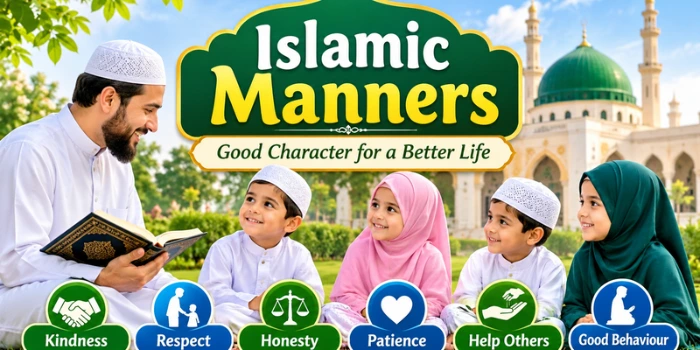
One of the most attractive qualities a Muslim can possess is good character. Islam instructs Muslims to act in the most exemplary ways in their daily lives, such as being patient, honest, respectful, kind and helpful. One's faith is revealed in one's treatment of others; parents, teachers, neighbors, friends and even strangers. The lessons in Islamic Manners help Muslims understand the significance of maintaining good behavior with people in order to maintain healthy and productive relationships.
The Holy Quran and the Prophetic Tradition give excellent and clear guidelines about good morals. The Prophet (PBUH) personified excellent behavior. His life provides a lesson to Muslims to treat others in the best manner, with respect, patience and by speaking softly. His exemplary life shows that one should not hurt anyone, be it an adult, or a younger one, or through actions or words.
Good habits should be instilled from an early age. The importance of children learning these good values cannot be understated. Daily activities, storytelling, and examples are ways for children to learn and adopt good values and behaviors. Resources like Deeniyat Online can also be useful in this process.
What Are Islamic Manners?
Islamic Manners refer to the good qualities and virtues in a Muslim’s character as encouraged by the Quran and the Sunnah. These Manners assist Muslims in all areas of life - personal, family, social, and religious. Such manners include greeting others with ‘Assalamu Alaikum’, being honest, keeping promises, being kind, and helping people in need, including parents.
It is also important for a person to be well mannered in the privacy of their home, among family, and when alone. Islam emphasizes the need to be well mannered in all situations, including in the workplace, and school.
Some important examples include:
Speaking politely and avoiding hurtful words.
Respecting parents, teachers, and elders.
Being honest in conversations and dealings.
Keeping promises and fulfilling responsibilities.
Helping poor and needy people.
Avoiding backbiting, jealousy, and arrogance.
Forgiving others and controlling anger.
Maintaining cleanliness and personal hygiene.
Following these values makes everyday life more peaceful and strengthens relationships between people.
Teachings About Good Manners in the Quran and Sunnah
The Quran encourages Muslims to develop excellent character and treat others with kindness. Allah commands believers to speak good words and avoid harmful behaviour.
In Surah Al-Hujurat (49:11–12), Muslims are warned against mocking others, insulting people, and speaking negatively about them. These verses teach the importance of respecting everyone's dignity.
The Quran also teaches Muslims to be humble and avoid arrogance. In Surah Luqman (31:18–19), people are advised not to turn away from others proudly and to keep their voices moderate.
The Sunnah also provides practical examples of good behaviour. Prophet Muhammad (peace be upon him) was known for his honesty, patience, forgiveness, generosity, and compassion.
One well-known hadith states:
"The best among you are those who have the best manners and character."
(Sahih al-Bukhari)
This teaching reminds Muslims that good character is an important part of their religious life.
Importance of Good Manners in Islam
The Importance Of Good Manners In Islam can be understood through the way good behaviour improves both individual character and society. Islam does not consider good behaviour a small or unimportant matter. It is an essential part of living according to Islamic teachings.
Here are some major benefits:
1. Strengthens Faith
Good behaviour reflects a person's understanding of Islamic teachings. When Muslims practise honesty, patience, kindness, and forgiveness, they demonstrate important values of their faith.
2. Builds Strong Relationships
Respectful communication helps people develop trust and understanding. Good behaviour between family members, friends, and neighbours creates a peaceful environment.
3. Encourages Respect and Kindness
People who treat others politely are more likely to build positive relationships. Islam encourages Muslims to respect people regardless of their age or social position.
4. Helps Control Anger
Patience is an important quality in Islam. Instead of reacting harshly during difficult situations, Muslims are encouraged to remain calm and respond wisely.
5. Creates a Better Society
Honesty, cooperation, generosity, and compassion help create a society where people support one another and avoid unnecessary conflicts.
Important Islamic Manners and Their Examples
Learning about good behaviour becomes easier when children and adults understand how to apply it in daily situations.
Respecting Parents and Elders
Islam gives great importance to respecting parents. Muslims should speak gently to their parents, listen to them, and help them whenever possible.
Children should also respect grandparents, teachers, and older family members. They can show respect by greeting them politely, listening carefully, and avoiding rude language.
Speaking Politely
Words can make people happy or hurt their feelings. Muslims should choose their words carefully and avoid lying, insulting, shouting, and spreading rumours.
The Quran encourages believers to speak in a kind and appropriate manner.
Being Honest and Trustworthy
Honesty is an important quality of a good Muslim. People should tell the truth, return borrowed belongings, and fulfil their promises.
Children can develop this habit by being truthful with their parents and teachers, even when they make mistakes.
Helping Others
Helping people is a beautiful way to demonstrate kindness. Muslims should support family members, assist neighbours, care for poor people, and show compassion towards those facing difficulties.
Islamic Manners for Kids and Students
Children learn behaviour by observing the people around them. Therefore, parents and teachers should introduce good habits through simple explanations and daily practice.
Islamic Manners For Kids should be taught in an enjoyable and practical way so children can understand their importance.
Some useful habits include:
Saying Bismillah before starting an activity.
Saying Alhamdulillah after eating.
Greeting others with Assalamu Alaikum.
Asking permission before entering a room.
Sharing toys and belongings.
Respecting parents and teachers.
Keeping their surroundings clean.
Being honest.
Avoiding unnecessary conflict.
Apologizing when you are wrong.
Islamic manners for students also teach them to value the process of education. This involves showing respect to the teachers, lending a hand to fellow students and being thorough in their school work. Students should realize that acquiring education is not all there is to education. The development of character is of the same significance.
Parents are able to teach children character through lessons and activities using religious stories. Deeniyat Online is able to help children understand the significance of behavior that is morally upright by helping children acquire knowledge of the religion.
Islamic Manners of Eating and Dining
Eating is one of the most routine and daily activities that we all perform, and there are adab (etiquette) that all Muslims should learn and adopt for when they are having a meal. This etiquette will cultivate within you an attitude of thankfulness and modesty, will promote cleanliness and respect for those around you, and more. Even for kids, the Islamic Manners of Eating is straightforward enough that they can be easily taught to practice these everyday.
Some important eating manners include:
Wash your hands before eating.
Begin eating by saying Bismillah.
Eat with your right hand.
Eat from the portion of food in front of you.
Avoid wasting food.
Eat in moderation.
Say Alhamdulillah after finishing your meal.
Avoid criticising the food.
Share food with others when possible.
Maintain cleanliness while eating.
These Islamic Table Manners help children develop discipline and gratitude.
Islamic Dining Manners for Children
Among the Islamic adab that children should learn is the importance of sitting down while eating, as well as keeping the dining space clean. It is important that children learn to not create unnecessary noise. Kids should also learn to Islamic Table Manners For Kids that they will actually consume, as well as to be respectful and wait for others before beginning to eat.
It is important to teach Islamic Eating Manners For Kids at an early age. Doing this builds habits and makes every family member enjoy every meal. Kids are less stressed at mealtimes when parents gently show them the eating etiquette rather than strictly memorising a set of rules.
Islamic Toilet Manners and Personal Hygiene
Cleanliness is an important part of Islamic life. Muslims are encouraged to maintain personal hygiene and keep their surroundings clean.
Islamic Toilet Manners include:
Entering the toilet with the left foot.
Reciting the prescribed dua before entering.
Avoiding unnecessary conversation inside the toilet.
Using the left hand for cleaning.
Maintaining proper cleanliness after using the toilet.
Leaving the toilet with the right foot.
Reciting the prescribed dua after leaving.
Parents should teach children these habits in an age-appropriate manner. They should also explain the importance of cleanliness without making children feel uncomfortable.
Islamic Manners and Etiquettes in Everyday Life
The teachings of Islam cover almost every aspect of daily living. Following Islamic Manners And Etiquettes helps Muslims behave respectfully in different situations.
Some everyday examples include:
Greeting others: Muslims should greet one another with Assalamu Alaikum and respond politely.
Visiting someone's home: People should ask permission before entering and respect the privacy of the household.
Meeting guests: Guests should be welcomed warmly, and hosts should treat them with kindness.
Using public places: Muslims should avoid disturbing others, throwing rubbish, or behaving disrespectfully.
Using social media: People should avoid spreading false information, insulting others, and sharing harmful content.
Respecting neighbours: Muslims should care about their neighbours and avoid actions that cause them inconvenience.
These simple practices demonstrate how good behaviour can be included in everyday activities.
Good Islamic Manners and Islamic Morals
Good Islamic Manners are closely connected with Islamic morals because both focus on developing a responsible and compassionate personality.
Some important moral qualities include:
Sabr (Patience): Remaining patient during difficulties.
Shukr (Gratitude): Being thankful for Allah's blessings.
Amanah (Trustworthiness): Taking care of responsibilities.
Sidq (Truthfulness): Speaking honestly.
Tawadu (Humility): Avoiding pride and arrogance.
Rahmah (Mercy): Showing compassion towards others.
Afw (Forgiveness): Forgiving people when appropriate.
These qualities are part of Islamic Morals And Manners and encourage Muslims to keep good relationships and act thoughtfully.
Children who learn to follow Good Islamic Manners For Kids can develop some Good Manners For Kids that stay with them throughout their lives. It is good for parents to teach these manners by giving appreciation and practicing good manners.
Good Manners in Islam Quotes and Hadith
The Quran and the Hadith have a lot of good teachings to guide one towards being kind, respecting others, being patient, and developing good habits.
Some of the good character traits are mentioned in these verses:
1. The Best Character
Prophet Muhammad (peace be upon him) said: “The best among you are those with the best good character and manners.” (Sahih al-Bukhari).
2. Kindness
Prophet Muhammad (peace be upon him) taught that kindness embellishes everything with which it becomes attached. (Sahih Muslim).
3. Controlling Anger
A man asked the Prophet Muhammad (peace be upon him) for some advice and the Prophet Muhammad (peace be upon him) told him to control his anger. He gave the man the same piece of advice several times. (Sahih al-Bukhari).
4. Speaking Good Words
Prophet Muhammad (peace be upon him) said, “He who believes in Allah and the Day of Judgment should say good or keep quiet.” (Sahih al-Bukhari and Sahih Muslim).
These Good Manners In Islam Quotes motivate Muslims to say kind and good things.
Reviewing 100 Ahadith About Islamic Manners can benefit people of all ages by helping them gain a better understanding of good manners. Having good manners is essential to every aspect of daily life, including personal relationships and conduct at work and school. Like all literature related to Islam, this book must be read with context from a trusted source.
Best Books to Learn Islamic Manners
Literature and books are an additional source to further help in the development of good habits and manners. Books that further the understanding of the Sunnah and the Quran in a simple way will help people of all ages, including parents, children and students.
Some recommended literature:
Islamic Manners Book: A suitable resource for learning everyday Islamic behaviour.
Islamic Manners Book PDF: This book covers all daily activities in Islam.
Islamic Manners PDF: Useful for revising important lessons about good character.
Islamic Manners Abu Ghuddah PDF: A search term associated with works and discussions on Islamic manners by Abdul Fattah Abu Ghuddah. Check the publication and translation details before downloading.
Islamic Manners For Kids Pdf: Helpful for introducing basic habits to young learners.
Manners In Islam Al-Adab Al-Mufrad Pdf: A resource search related to Imam Al-Bukhari's famous hadith collection, Al-Adab Al-Mufrad.
Manners In Islam Al Adab Al Mufrad Pdf: Another commonly used search variation for this collection.
Islamic Manners Activity Book PDF: Activity-based material that can make learning enjoyable.
Ibn Aqil Al-Hanbali Essay On Islamic Manners: A topic for readers interested in classical Islamic discussions about character and etiquette.
The works by Abdul Fattah Abu Ghuddah concerning manners are included in this book. Always check for a reputable source before downloading.
How Can Parents Teach Islamic Manners to Children?
Practicing good manners in front of children helps children to develop good manners and encourages good manners.
Here are some practical ways to teach good behaviour:
1. Practise What You Teach
If parents want children to speak politely, they should also use respectful language at home.
2. Teach One Habit at a Time
Start with simple habits such as saying Salam, eating with the right hand, and respecting elders. Introduce more lessons gradually.
3. Share Islamic Stories
Stories from the life of Prophet Muhammad (peace be upon him) help children understand kindness, patience, honesty, and forgiveness.
4. Appreciate Good Behaviour
Encourage children whenever they demonstrate honesty, helpfulness, or respect. Positive encouragement makes them more confident.
5. Make Learning Interactive
Worksheets, quizzes, Islamic activities, and classroom discussions can make religious education more interesting. Deeniyat Online can be a helpful learning resource for families who want to introduce children to Islamic knowledge and good character in an organised way.